
Introduction
Transforming Evidence and the Organisation for Economic Cooperation and Development (OECD) have created a Joint Fellowship working on the Evidence Web for Education (EWE), a project that helps education systems become more evidence-informed.
EWE aims to make the thoughtful and systematic use of evidence a reality in global education policy and practice by addressing known gaps and obstacles to effective evidence mobilisation. It does this by supporting evidence intermediaries to improve the quality, coherence and effectiveness of their mobilisation work. It has three inter-related pillars, currently at different stages of development:
- Evidence Web: a structured evidence meta-portal, which will gather and connect existing evidence repositories for the benefit of (primarily) evidence intermediaries.
- Knowledge Bridge: a resource bank of research-based tools, which will support intermediaries to improve their knowledge mobilisation work.
- Peer Learning: learning and development activities, which support intermediaries to build their mobilisation capacity and peer communities.
Our Approach
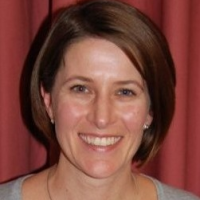
Through the Fellowship arrangement, Julie Nelson will support the OECD team by engaging in exploratory and conceptual work to underpin EWE’s Knowledge Bridge and Peer learning pillars. The long-term goal is to create a living evidence needs map and a methodology linking countries’ national research priorities to available evidence products. The parameters of the Fellowship are currently being scoped, but are likely to include:
- An exploratory phase: gathering and documenting information about the mechanisms used by countries to identify their policy and practice evidence priorities (where this occurs); and understanding how these relate to (or can be translated into) research needs/questions. Gathering and documenting the country-level policy and practice priorities/questions that are identified through the above processes.
- An explanatory phase: developing country case studies to showcase the processes and mechanisms currently in place to identify national policy and practice research priorities; and early-stage conceptual work to develop a framework to support the subsequent development of a taxonomy of national policy and practice research needs/questions.
Transforming Evidence’s founders – Annette Boaz and Kathryn Oliver – are also engaged in this project in an advisory capacity.
This is what we’ve learned so far
The Transforming Evidence - OECD Fellowship commenced in June 2026 and findings will be shared in due course.
The OECD has previously stated that “… enormous investment and effort has aimed to reinforce the quality, production and use of education research in policy and practice. Despite this, strengthening the impact of research in education policy making and practice remains a challenge for many systems.” Strengthening the Impact of Education Research | OECD
Outputs and findings
The Fellowship will support the iterative development of the EWE project’s work on evidence needs – enabling it to move beyond its exploratory and explanatory phases towards publication of a bank of country case studies and a living global evidence needs map, between 2027 and 2030.